Paintless Dent Repair vs. Traditional Body Work: Pros & Cons Explained
Car dents happen fast—hail, a runaway shopping cart, or a fender bender. Suddenly, your car’s smooth finish has a bruise. You want it fixed, and you want it done right. But which fix is best for your situation? That’s where Brandy’s Autobody Repair comes in.
Let’s break down the difference between paintless dent repair (PDR) and traditional body work so you can make a clear decision. We’ll keep it simple, honest, and grounded in real-world experience.
What is Paintless Dent Repair? 🛠️
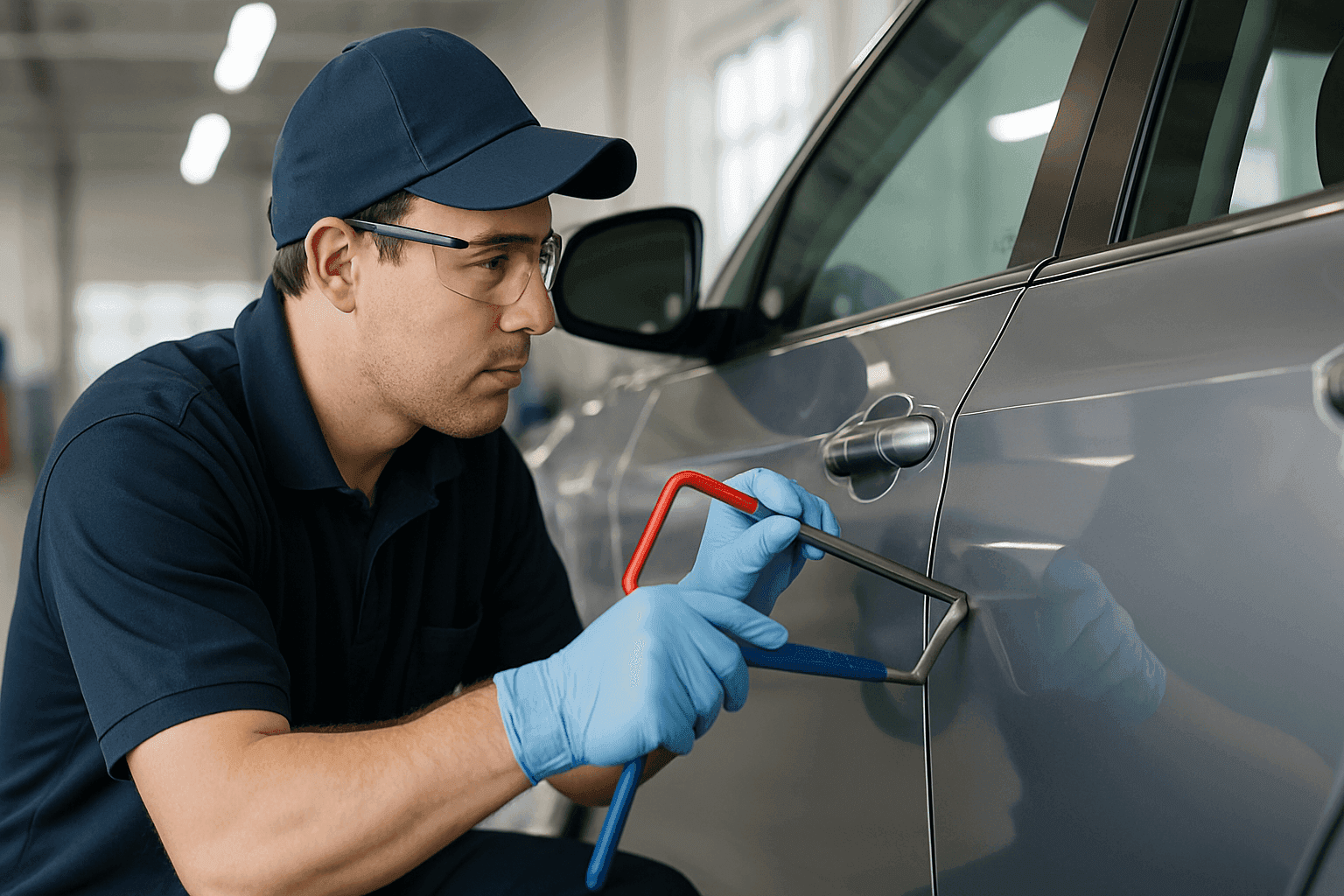
Paintless dent repair is like gently massaging a bruise out of your car’s skin—without covering it up or adding new paint. Skilled technicians use special rods and hand tools to reach behind the panel and work the dent out, bit by bit, until the metal returns to its original shape. The factory paint stays untouched. No fillers, no sanding, no paint booths.
Best for:
- Small to medium dents
- Dings where the paint is still intact
- Hail damage
- Creases and minor door dings
Why choose PDR?
- Keeps your car’s original paint
- Faster than traditional repairs
- Often costs less
- Environmentally friendly (no chemicals or paint)
But PDR does have its limits. If the paint is cracked, if the metal is stretched too far, or if the dent is near an edge or body line, it might not be the right approach.
When to Choose Traditional Body Work
Think of traditional body work like a full renovation. When the damage is deeper—paint scratched, metal bent, or panels torn—you need more than a gentle touch. This process can involve sanding, filling, priming, painting, and refinishing.
Best for:
- Dents with chipped or cracked paint
- Deep creases or sharp body line damage
- Large collision damage
- Rust repairs
What’s involved?
- Damaged area is sanded down
- Body filler is applied to reshape the surface
- The area is primed and repainted
- The finish is blended to match the rest of the car
Traditional body work is versatile, but it takes longer and can be more expensive due to materials, labor, and drying time.
Myths About Dent Repair—Busted
There are plenty of tall tales out there. Let’s set the record straight:
-
Myth: PDR can fix any dent.
Reality: It only works on dents where the paint isn’t broken and the metal isn’t stretched. -
Myth: DIY suction cups or hot water will fix dents.
Reality: These tricks rarely work and can make things worse, leading to more expensive repairs. -
Myth: Once a panel is painted, it’s never the same.
Reality: With expert refinishing, color blends can be nearly invisible—if you work with trained pros.
How to Assess Your Damage
Not sure which method is right? Here’s what to look for:
- Check the paint. Is it cracked or missing? If yes, traditional body work is likely needed.
- Feel the panel edges. Dents near edges or body lines are tougher for PDR.
- Look at the size. PDR is best for smaller dents (think baseball-sized or smaller).
- Check for rust. Rust means traditional repair—PDR can’t stop corrosion.
When in doubt, bring your car in. At Brandy’s Autobody Repair, we use industry standards from the Inter-Industry Conference on Auto Collision Repair (I-CAR) to guide assessments.
Environmental Impacts 🌱
Paintless dent repair is the green option. No sanding dust. No paint fumes. No need for harsh chemicals. It’s recycling, but for your car’s body panels.
Traditional body work, while sometimes necessary, involves solvents, paints, and energy-intensive processes. We use modern, environmentally responsible products and methods—but PDR is hard to beat for eco-friendliness.
Factors Affecting Cost and Results
Let’s talk dollars and sense. What you pay—and the results you get—depend on:
- Size and location of the dent
- Severity of the damage
- Paint condition
- Type of vehicle
- Labor time and material costs
PDR is usually faster and less expensive for minor dents. Traditional repairs take more time and materials. Remember, insurance may cover some or all of the repair, especially for collision or hail damage. Brandy’s Autobody Repair helps with insurance claims—so you don’t have to navigate it alone.
Quick Safety Checklist
Before you drive with a dent or attempt a fix, consider:
- Is the damage affecting your windshield, lights, or tires?
- Are sharp edges exposed?
- Is the dent interfering with doors or trunk operation?
- Any warning lights on your dashboard?
If any answer is yes, get your vehicle checked by an auto_body professional right away.
DIY vs. Call a Pro
We get it—DIY videos make repairs look easy. But most home methods can worsen the damage.
DIY might be okay for:
- Tiny, surface-level dings (less than a dime)
- No paint damage
Call a pro when:
- Paint is chipped, cracked, or missing
- The dent is larger than a golf ball
- You see rust or sharp creases
- The dent affects a safety system (airbags, sensors)
Remember: Proper brake repair near you, collision repair, and structural fixes are best left to certified technicians.
What Pros Do On Arrival
When you bring your vehicle to Brandy’s Autobody Repair, here’s what happens:
- Assessment: We inspect the damage, paint, and surrounding panels.
- Estimate: You get a clear, written estimate—no surprises.
- Method selection: We recommend PDR or traditional body work based on damage and your needs.
- Work begins: Our certified technicians use I-CAR and ASE standards.
- Quality check: Before you pick up your car, we inspect every detail for safety and finish.
Prevention & Maintenance Tips
A few simple habits can help keep your car looking sharp:
- Park away from crowded areas or under cover during hail season
- Use car covers for extra protection
- Wash and wax regularly to spot damage early and protect your paint
- Repair chips and scratches quickly to prevent rust
Costs & Time Factors (Ranges, Not Quotes)
How much will you spend? It depends.
- Paintless Dent Repair: Can be done in a few hours. Lower materials cost. Great for minor dings.
- Traditional Body Work: May take several days (to allow for paint curing and blending). Costs are higher due to labor, materials, and equipment.
Always ask for a written estimate. If you’re filing an insurance claim, bring in your paperwork—we’ll help you through the process.
When It’s an Emergency 🚨
Some dents aren’t just cosmetic. If you have:
- Broken glass or lights
- Exposed sharp edges
- Doors or hoods that won’t shut
- Damage near airbags or sensors
Don’t wait. Get the car to a professional auto_body shop right away. Safety comes first, every time.
FAQ: Paintless Dent Repair vs. Traditional Body Work
Q: Will a PDR repair show in bright sunlight?
A: Not if done correctly. Professional PDR restores the original shape, so you won’t notice it—even in sunlight.
Q: Does insurance cover paintless dent repair?
A: Many policies do, especially for hail or collision damage. Check with your provider or ask us for help.
Q: Can I get PDR on aluminum panels?
A: Sometimes, but it’s more challenging. Our technicians can assess if it’s possible.
Q: Will the repair affect my car’s value?
A: Quality repairs—especially PDR—help maintain your car’s value. Poor DIY fixes or ignored dents can hurt resale.
Local & Seasonal Considerations
In our region, hailstorms, icy roads, and parking lot mishaps are common. Quick, expert repairs help prevent rust and keep your car looking sharp, no matter the season. If you’re searching for “brake repair near you,” “auto_body repair,” or “collision repair,” choosing a certified shop like Brandy’s Autobody Repair means your car is in good hands, year-round.
Whether you’re facing a tiny door ding or a major dent, Brandy’s Autobody Repair is here to help you choose the best fix for your vehicle and your peace of mind.
Call Brandy's Autobody Repair now — or reach us anytime at 877-837-7461 .