Auto Body Repair After Hail or Storm Damage: What to Do First
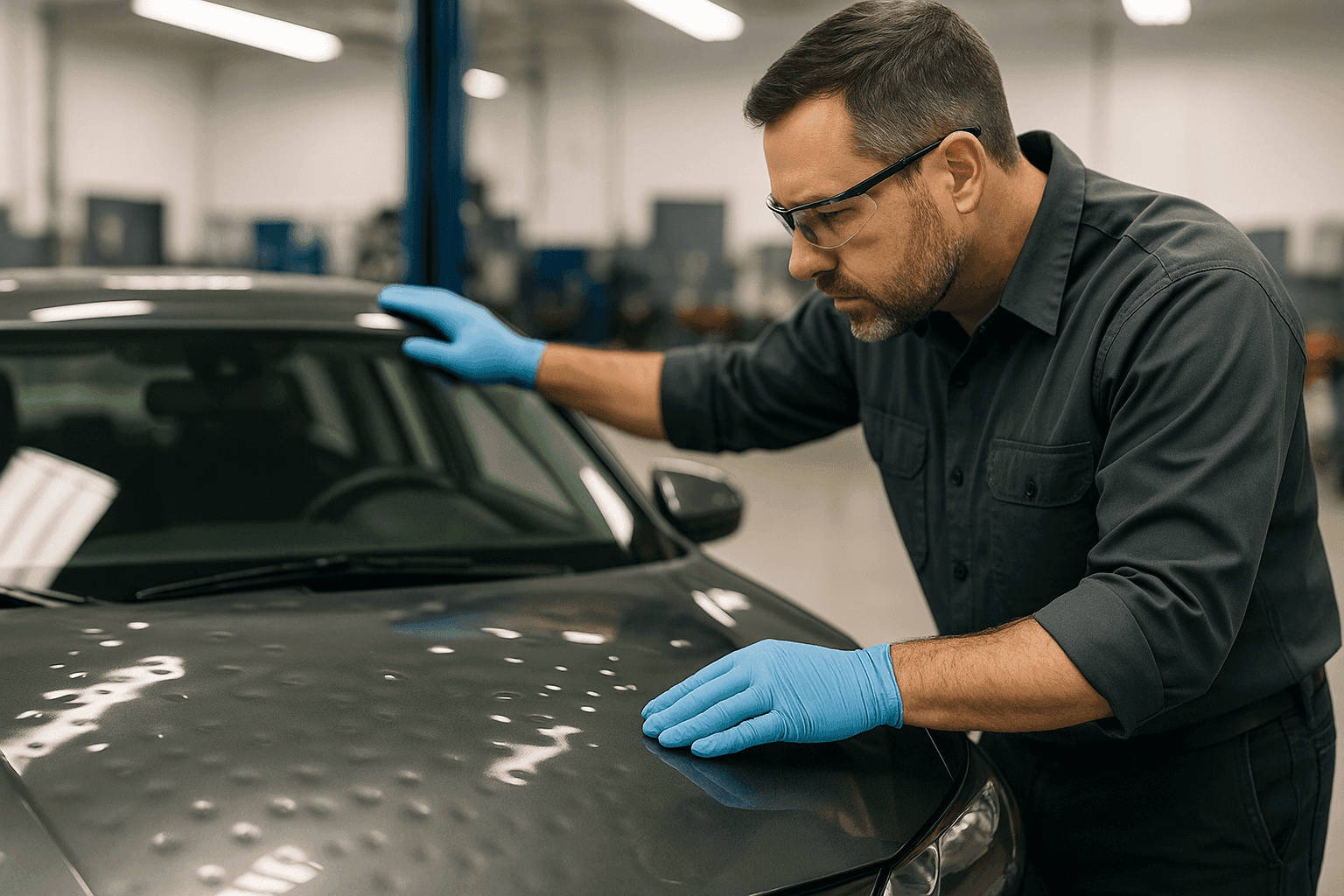
When hail or a severe storm strikes, it’s more than just loud noise and flashing lights. Your vehicle—whether it’s your daily driver or a fleet vehicle for your business—can end up looking like a golf ball. Dents. Cracked glass. Damaged paint. It’s overwhelming. You want your life (and your car) back on track, fast.
At Brandy’s Autobody Repair, we’ve seen thousands of storm-damaged vehicles and helped owners—residential and commercial—navigate the repair process. You don’t have to figure this out alone.
Assessing Damage Safely 🛑
The storm has passed. Now what? Before you rush outside, take a deep breath. Safety first—always.
- Wait for an official all-clear. Downed power lines, broken glass, and slick surfaces are common after storms.
- Check for immediate hazards. Look for leaking fluids, shattered glass, or dangling parts before touching or entering your vehicle.
- Photograph everything. Use your phone to capture the damage from multiple angles—roof, hood, windows, mirrors, bumpers, and wheels.
- Do not attempt to drive if the windshield or headlights are shattered. Visibility and structural safety are at risk.
- If you must move the vehicle, do so slowly and only if it’s safe.
- Make temporary repairs. If rain is still falling, cover broken glass with plastic sheeting or a tarp secured with tape to prevent water from getting inside. Avoid using duct tape on painted surfaces—it can strip paint later.
For commercial vehicles, assign a team member to handle documentation and initial assessment. The Federal Emergency Management Agency (FEMA) and the National Weather Service recommend keeping a storm kit (flashlight, gloves, basic tools) in your vehicle year-round.
Filing Claims Effectively
You’ve documented the damage. The next step is often the most daunting: insurance.
- Call your insurance provider as soon as possible. Many companies have a 24/7 claims line. The sooner you call, the quicker your claim is placed in line.
- Provide clear, detailed photos and a written description. Note the date, time, and location of the incident.
- Ask specific questions:
- What’s covered under your policy?
- Are rental cars included?
- Do you need an adjuster to visit, or can you visit a shop like Brandy's Autobody Repair directly?
- Keep records. Save all correspondence, claim numbers, and documentation in one place.
- Beware of quick cash offers or pop-up repair tents. These may not provide quality work or warranty.
For fleet operators, check with your risk management or fleet services department for streamlined claims processes. Reference your company’s vehicle policy and the Insurance Information Institute for claim best practices.
Choosing a Qualified Repair Shop 🛠️
Not all auto_body shops are created equal. After a storm, you’ll see many fly-by-night operations pop up. Here’s how to choose wisely:
- Look for established, licensed auto_body repair facilities. Check for certifications, years of service, and a professional facility.
- Ask about repair methods. Will they use paintless dent repair (PDR) when possible? Are OEM (original equipment manufacturer) parts available for panel or glass replacement?
- Get a written estimate. A reputable shop will explain the repair plan, materials, and expected timeline.
- Ask about warranty and aftercare. Understand what’s covered after you drive away.
- Check reviews and references. Friends, neighbors, and business contacts are often reliable sources.
Brandy’s Autobody Repair offers a full suite of post-storm services, from dent removal and glass replacement to brake repair near you, ensuring that both safety and appearance are fully restored.
Common Pitfalls: What to Avoid
It’s easy to make snap decisions after a stressful event. Here are some traps to sidestep:
- Delaying documentation: Waiting too long can make insurance claims harder.
- Ignoring “minor” damage: Small dings can lead to rust, water intrusion, or compromised safety systems.
- Choosing the cheapest or fastest option: Quick fixes often skip crucial steps, risking your investment.
- Not following up: Always check the status of your claim and repairs. Stay proactive.
Clarifying the Repair Timeline
“How long will this take?” It’s the million-dollar question. Here’s what to expect:
- Initial assessment: 1–2 days (may vary during peak storm season).
- Insurance approval: 2–7 days, depending on adjuster schedules.
- Parts ordering: 2–5 days, longer if specialty parts are needed.
- Repair process: Simple paintless dent repair or glass replacement can take 1–3 days. Severe body work, frame straightening, or panel replacement may take 7–14 days.
- Quality check and detailing: 1 day.
Remember, large-scale storms can create backlogs. Communication with your shop is key. The National Institute for Automotive Service Excellence (ASE) recommends asking for estimated completion dates and regular updates.
Peace of Mind: The Right Steps to Take
You don’t need to become a repair expert overnight. Just follow these steps:
- Stay safe. Never risk injury for property.
- Document all damage. Take clear photos and notes.
- Report the claim promptly.
- Choose a reputable, established auto_body repair shop.
- Ask questions. Understand the process, costs, and expected results.
For business fleets, designate a point person for all communication. For families, keep everyone informed and involved.
Expert Insights for Homeowners and Fleet Operators
- Paintless Dent Repair (PDR): Best for small hail dents without paint damage. Quick and cost-effective.
- Panel Replacement: Needed for severe dents, creases, or cracked panels.
- Glass Replacement: Windshield chips can often be repaired, but cracks and shatters require full replacement.
- Wheel Alignment and Brake System Services: Storms can knock your wheels out of alignment or impact brakes. Always request a post-storm safety check.
- Insurance Claims Assistance: A professional shop can walk you through the paperwork, but you remain in control of your claim.
Frequently Asked Questions
How soon after a storm should I repair hail damage?
As soon as possible. Even minor damage can let in water and cause rust. Fast action also helps with insurance claims.
Can I drive with a cracked windshield?
Small chips may be safe for short drives, but cracks or shattered glass compromise safety. Have it inspected and replaced quickly.
What if my vehicle has both cosmetic and mechanical damage?
Comprehensive auto_body shops like Brandy’s can handle both—frame straightening, suspension repair, wheel alignment, and more. Always request a full inspection.
Will my insurance rates go up?
It depends on your policy and claim history. The Insurance Information Institute offers guidelines for understanding post-storm claims.
Local and Seasonal Considerations 🌦️
Storm and hail seasons vary by region, but preparedness is always smart. For those in high-risk areas, consider:
- Covered parking or carports.
- Storm kits in vehicles.
- Reviewing your insurance policy annually.
- Keeping contact info for a trusted auto_body shop handy.
Commercial operators should review fleet policies and create a storm response checklist for drivers and managers.
Final Thought
Storms can be sudden and stressful, but you don’t have to face the aftermath alone. Take it one step at a time. Your vehicle—and your peace of mind—are in good hands when you know what to do first.
Call Brandy's Autobody Repair now — or reach us anytime at 877-837-7461 .